
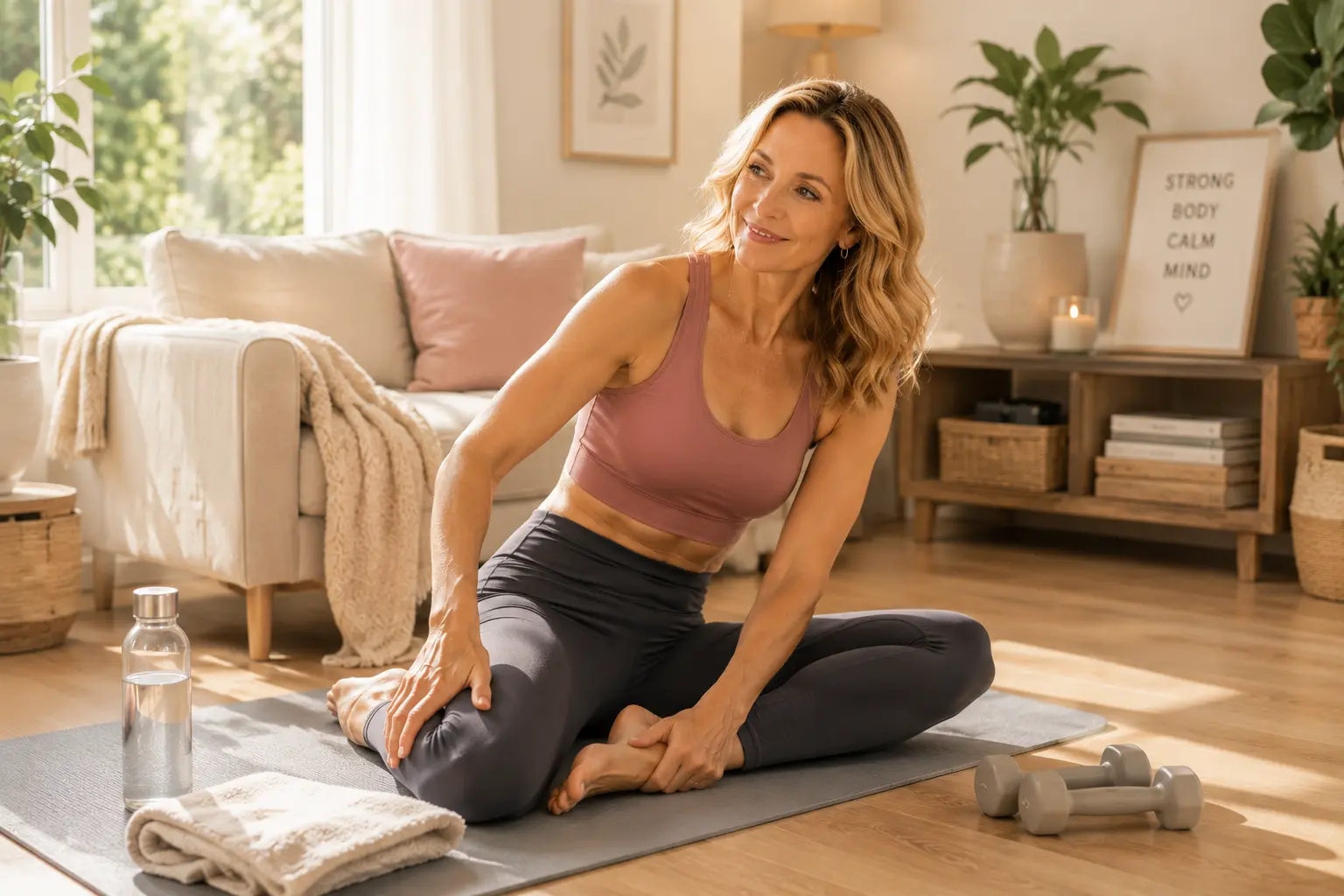
Why Yoga Might Be the Easiest Way to Start Moving Again
If the idea of “starting to exercise” makes you tired just thinking about it, you’re not alone, and yoga might be the one form of movement that doesn’t come with all the usual baggage — no gym intimidation, no equipment to buy, no need to already be fit before you start. It just asks you to show up on a mat, a towel, or the living room floor for a few minutes.
Why People Get Stuck Before They Even Start
Most people who want to move more aren’t lacking motivation, they’re stuck on a decision that feels bigger than it needs to be: which program, which app, which gym, which time of day. By the time all of that is sorted out, the energy for actually moving has usually evaporated. Yoga for beginners removes most of these decisions. You need a small amount of floor space and roughly ten to twenty minutes. That’s it.
There’s also the common worry of not being “flexible enough” for yoga, which is a bit like saying you’re not clean enough to take a shower. Flexibility is the result of practicing yoga, not a requirement for starting it. Every pose has an easier version, and a beginner practice is built entirely around this idea.
What Yoga Actually Does for the Body
Beyond flexibility, regular gentle yoga supports joint mobility, balance, and muscle tone in a way that’s low-impact and sustainable — meaning it’s something you can realistically keep doing for years, not just a few intense weeks before burnout. It also tends to improve posture over time, which matters more than people expect, especially for anyone who sits for long stretches during the day.
There’s a breathing component to yoga that’s easy to overlook but genuinely useful: most styles pair movement with slower, more intentional breathing, which has a calming effect on its own, separate from the physical benefits. It’s part of why people often say yoga leaves them feeling different — not just physically, but mentally — than a typical workout.
Might Help: Yoga for Beginners
A Few Common Misconceptions Worth Clearing Up
There’s a persistent idea that yoga is only for people who are already calm, bendy, or spiritually inclined — none of which is true, and none of which is required. Yoga is simply a form of movement with breathing built in; the calm tends to come from doing it, not from being a certain kind of person beforehand. Another common misconception is that a session needs to be long to “count” — even five or ten minutes has real value, and a short consistent practice will do more for you than an occasional ambitious one you can’t sustain. And plenty of people worry they need special clothes or a particular kind of mat before they can start, when in reality, any comfortable clothing and a bit of floor space is genuinely enough to begin.
Starting Small on Purpose
The biggest mistake people make when starting yoga is trying to do too much too soon — an hour-long class, an ambitious pose, a daily streak they can’t realistically keep. A better approach: ten minutes, three times a week, focused entirely on the basics. Child’s pose, cat-cow, a gentle forward fold, a few sun salutations if you’re comfortable. That’s a complete beginner practice, and it’s enough to start noticing a difference within a few weeks.
It also helps to let go of any expectation of how a session “should” look. Some days your body will move more easily than others, and that’s normal, not a sign you’re doing it wrong.
Making It a Habit, Not a Project
The reason so many well-intentioned movement plans fail isn’t lack of willpower, it’s that they’re treated as a project with a start and end date rather than something woven into daily life. Yoga works best as a quiet, repeatable habit — same time of day, same small corner of the room, low enough effort that skipping it feels more disruptive than doing it.
If mornings are already a struggle, even attaching a five-minute stretch to something you already do — right after brushing your teeth, right before making coffee — can be enough to get it started without adding real friction to your day.
Where to Go From Here
If you’re ready to try it but don’t want to sift through hours of conflicting videos and advice online, our library includes Yoga for Beginners, a simple, structured way to ease into a practice at your own pace — no studio, no experience, and no pressure to get any of it perfect.
Might Help: Yoga for Beginners









0 Comments